Cloudflare's critical WebSocket Patch exposes a bigger question: Who's watching your eCommerce stack?
Cloudflare just shipped a flurry of updates last 16th June across its Workers SDK ecosystem, Wrangler 4.102.0, Miniflare 4.20260617.0, and the Cloudflare Vite Plugin 1.42.0. Buried in the patch notes of each release is the same critical fix: a bump of the ws WebSocket library from 8.20.1 to 8.21.0, addressing CVE-2026-48779, a high-severity remote denial-of-service vulnerability.
The bug is deceptively simple. A malicious peer can send a high volume of tiny WebSocket fragments over modest network traffic, causing memory exhaustion that crashes any ws server or client via out-of-memory errors. For eCommerce teams running Cloudflare Workers at the edge, handling real-time inventory, live chat, or dynamic pricing, this vulnerability could take down customer-facing functionality without warning.
But here's the real issue: how many eCommerce teams even knew they were exposed?
The invisible dependency problem
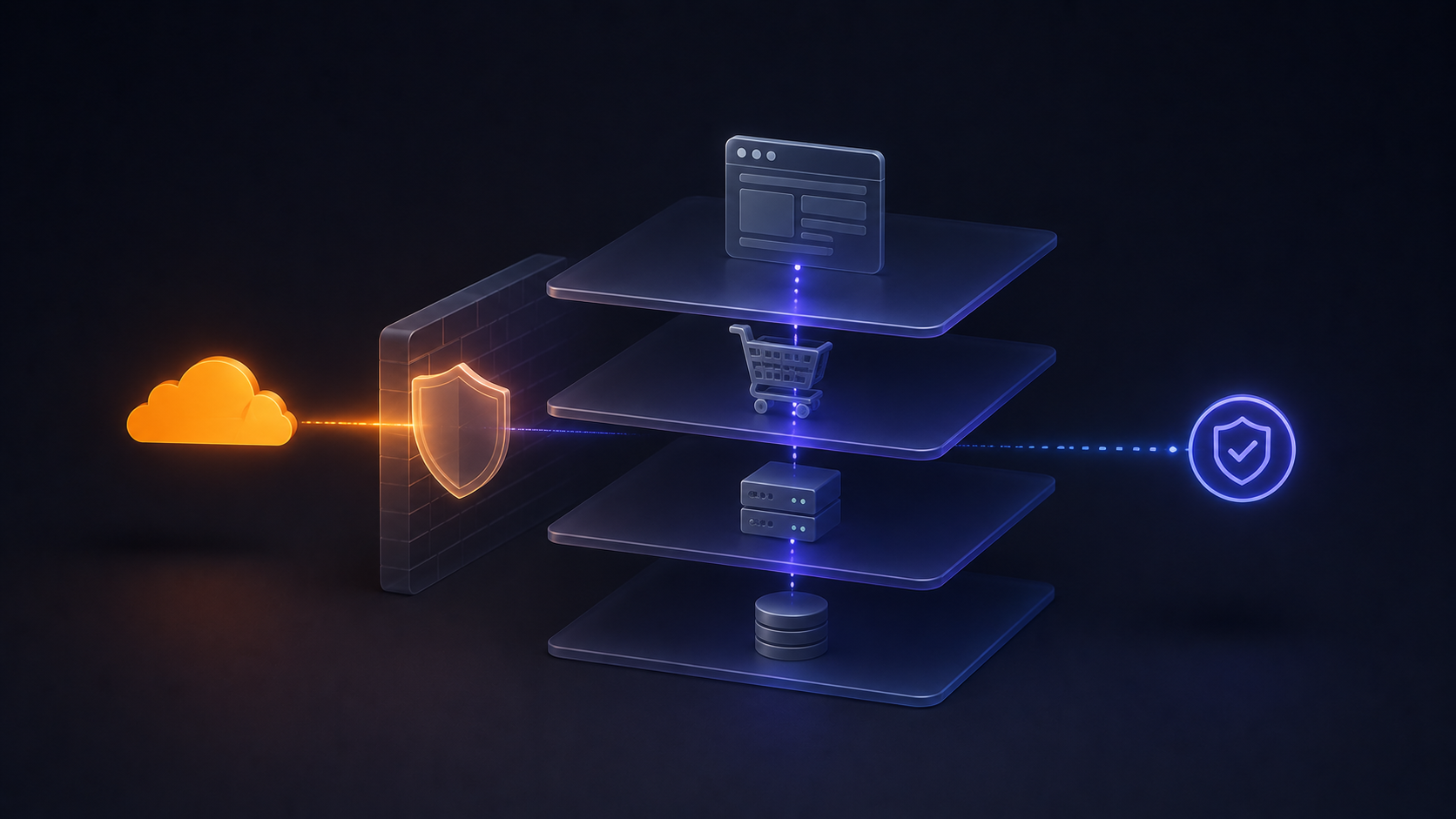
Modern eCommerce stacks are built on layers of dependencies. Your Shopify app uses Cloudflare Workers. Those Workers use Wrangler. Wrangler depends on ws. And a vulnerability four layers deep can bring your checkout to its knees.
CVE-2026-48779 is a textbook example of what security researchers call a "transitive dependency vulnerability." Your team didn't choose ws. They probably didn't know it was in the stack. Yet a single attacker exploiting it could crash your real-time WebSocket connections, everything from live shipping calculators to support chat widgets, right as a customer is mid-checkout.
This is far from an isolated case. The Cloudflare workers-sdk release also bumped undici from 7.24.8 to 7.28.0 and esbuild to 0.28.1. Each of these carries its own set of resolved issues. Multiply this across every platform, plugin, and service in a typical eCommerce stack, and you begin to see the scale of the monitoring challenge.
Performance and security are two sides of the same coin
The same Cloudflare release wave introduced genuinely useful developer features. The new Vite Plugin 1.42.0 adds a build command to the experimental cf-vite delegate binary, emitting a self-contained Build Output API directory. Wrangler 4.102.0 adds an --experimental-cf-build-output flag that produces deployable output without going through wrangler deploy --dry-run.
These are meaningful workflow improvements for teams building edge-first eCommerce experiences. But they also add complexity. New build paths mean new failure modes. New deployment patterns mean new things to monitor.
Meanwhile, HTTPArchive data from 2025 reveals that only 39% of eCommerce sites pass all three Core Web Vitals simultaneously, three percentage points below the global web average. Every new layer of infrastructure is another place where performance can degrade, and every degradation directly impacts conversion. Studies consistently show that a 100-millisecond improvement in page load time can boost conversion rates by up to 7%.
What eCommerce teams actually need
The challenge isn't any single vulnerability or any single performance regression. It's the compounding effect of dozens of updates, patches, and changes happening every week across platforms like Cloudflare, Shopify, and WooCommerce, each one potentially affecting the live customer experience.
Most eCommerce teams discover problems reactively: a spike in support tickets, a dip in conversion rates, or worse, a social media post from a frustrated customer. By then, the revenue damage is already done.
What's needed is continuous, real-time visibility into how your live site is actually performing for real users. Not synthetic tests that pass in a lab while real customers hit errors. Not server-side logs that miss client-side JavaScript failures. Not quarterly audits that are outdated by the time they're delivered.
This is exactly the problem AuditIQ was built to solve. AuditIQ provides real-time monitoring of your eCommerce storefront from the customer's perspective, catching the JavaScript errors, broken checkout flows, and performance regressions that slip through traditional monitoring. When a dependency update like yesterday's Cloudflare patch introduces an unexpected interaction with your theme or custom code, AuditIQ surfaces the issue before it impacts revenue.
The takeaway
Cloudflare's swift response to CVE-2026-48779 is commendable. But patching is only half the equation. The other half is knowing, in real time, whether your live eCommerce site is actually working as expected after every update, every deployment, and every third-party script change.
If your monitoring strategy depends on customers telling you something is broken, you're already losing revenue. Discover how AuditIQ gives you real-time visibility into your eCommerce site's health.
About the author
Dan Garner writes from AuditIQ's experience monitoring eCommerce performance, SEO, security, and reliability issues across Magento, Shopify, WooCommerce, and Adobe Commerce stores.