From alerts to answers: How AuditIQ’s anomaly detection finds what matters
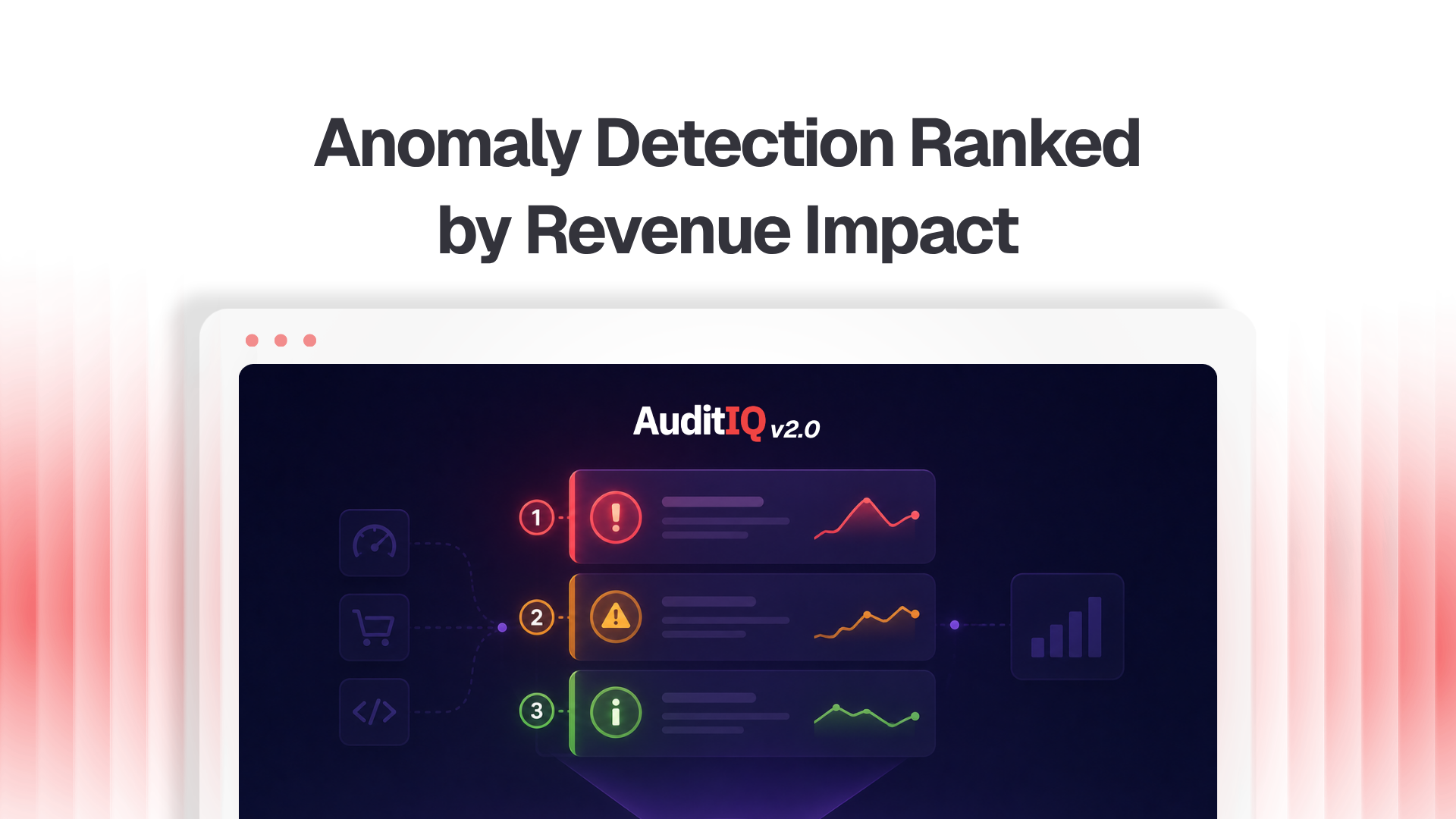
The teams that struggle with monitoring are rarely the ones watching too little. They are the ones watching too much, with no way to tell the difference between a signal and a distraction.
Ask anyone who runs monitoring at scale what their real problem is, and they rarely say "not enough data." Dashboards full of green and red, thresholds firing all day, and a nagging worry that the one alert that mattered got lost in the noise. And more data doesn't necessarily mean an easier job.
Most monitoring tools were built to detect everything and prioritise nothing. Alert fatigue is the predictable result.
Why thresholds aren’t enough
Traditional monitoring fires when a metric crosses a line you set in advance. That works for a server falling over, but it falls short for the failures that actually drain revenue.
Consider 3 scenarios that no simple threshold will catch:
- A checkout field that silently drops a value on one browser
- A third-party script that slows your product pages by 400ms
- Or an SEO regression that only shows up three weeks later in traffic.
None of those trip a simple threshold. All of them cost you money. And in each case, the problem was not that the data was missing. It was that nothing connected the dots.
What the intelligence layer does differently
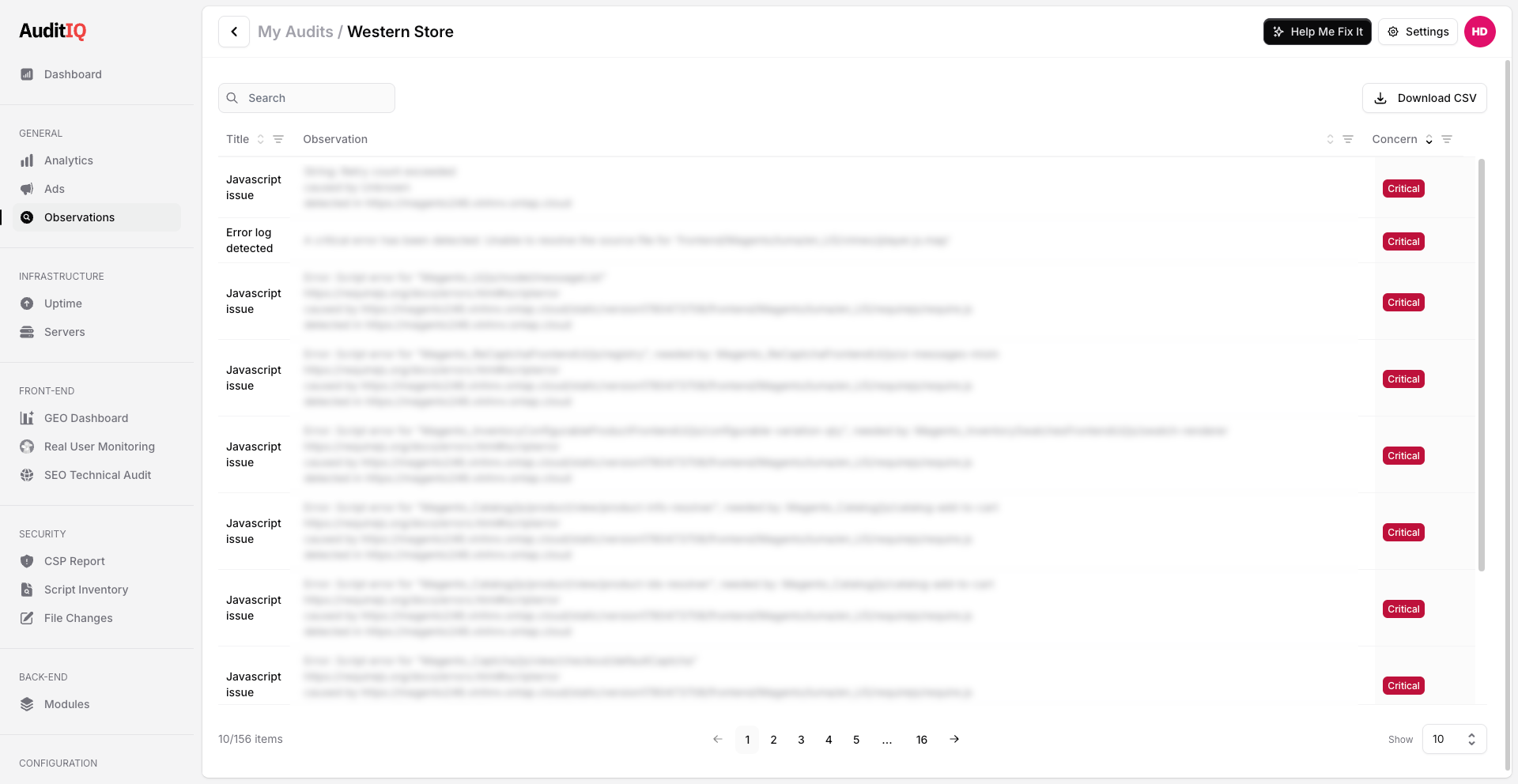
AuditIQ v2’s intelligence layer watches across modules, learns what normal looks like for your store, and surfaces the unusual, then ranks it. Instead of fifty equal-weight alerts, you get a short, prioritised list of Observations:
- Cross-module anomaly detection connects signals that other tools keep separate. A performance dip, a script change, a conversion drop: three events that belong to one story, now visible as one.
- Revenue-ranked Observations mean your team opens AuditIQ and immediately knows what to fix first, not what fired loudest.
- Built-in context means each Observation comes with an explanation: what changed, where it happened, and what to look at next. The investigation starts where most tools stop.
- A shared timeline puts every signal in sequence, so cause and effect stops being a guessing game.
What changes is not how much you see. It is how quickly you can act on it. The intelligence layer does the watching, the connecting, and the prioritising, so your team only has to do one thing: fix what actually matters.
What it means for your team
1. For in-house teams: Open AuditIQ. The top three issues worth your attention are already ranked, explained, and ready to act on. No guesswork. No cross-referencing four dashboards before you know where to start.
2. For agencies: Your team walks into Monday already knowing which client sites need attention and why. Not because someone checked each one manually over the weekend, but because AuditIQ already did.
Monitoring should reduce anxiety, not add to it. The intelligence layer is how v2 does that: it does the watching and the thinking, so your people can do the fixing.
The problem is not a lack of data, but a lack of prioritisation. The intelligence layer solves that by doing what no single-purpose tool can: connecting signals across your entire store, ranking what matters by revenue impact, and surfacing answers instead of alerts.
Book us a demo to see your alerts ranked by revenue impact and start AuditIQ eCommerce monitoring free trial today!
About the author
Dan Garner writes from AuditIQ's experience monitoring eCommerce performance, SEO, security, and reliability issues across Magento, Shopify, WooCommerce, and Adobe Commerce stores.